Case study — IoT & automation
From hand-built rig to app-controlled brewery
A small craft brewery in Croatia wanted consistent beer without living next to the tanks. Three build phases and 73 batches later, everything from mashing to fermentation runs itself — and reports to a phone 30 minutes away.
It started analog
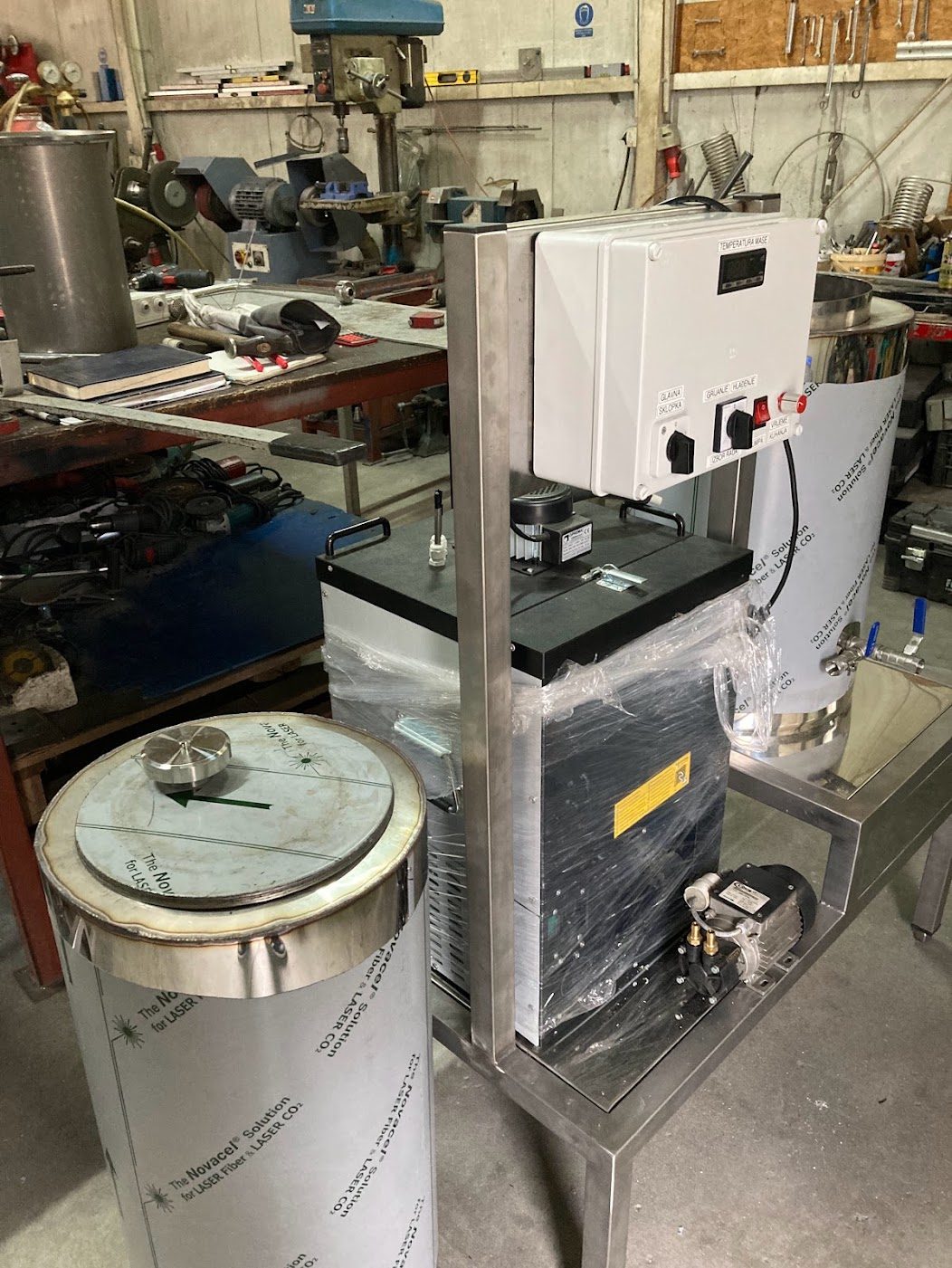
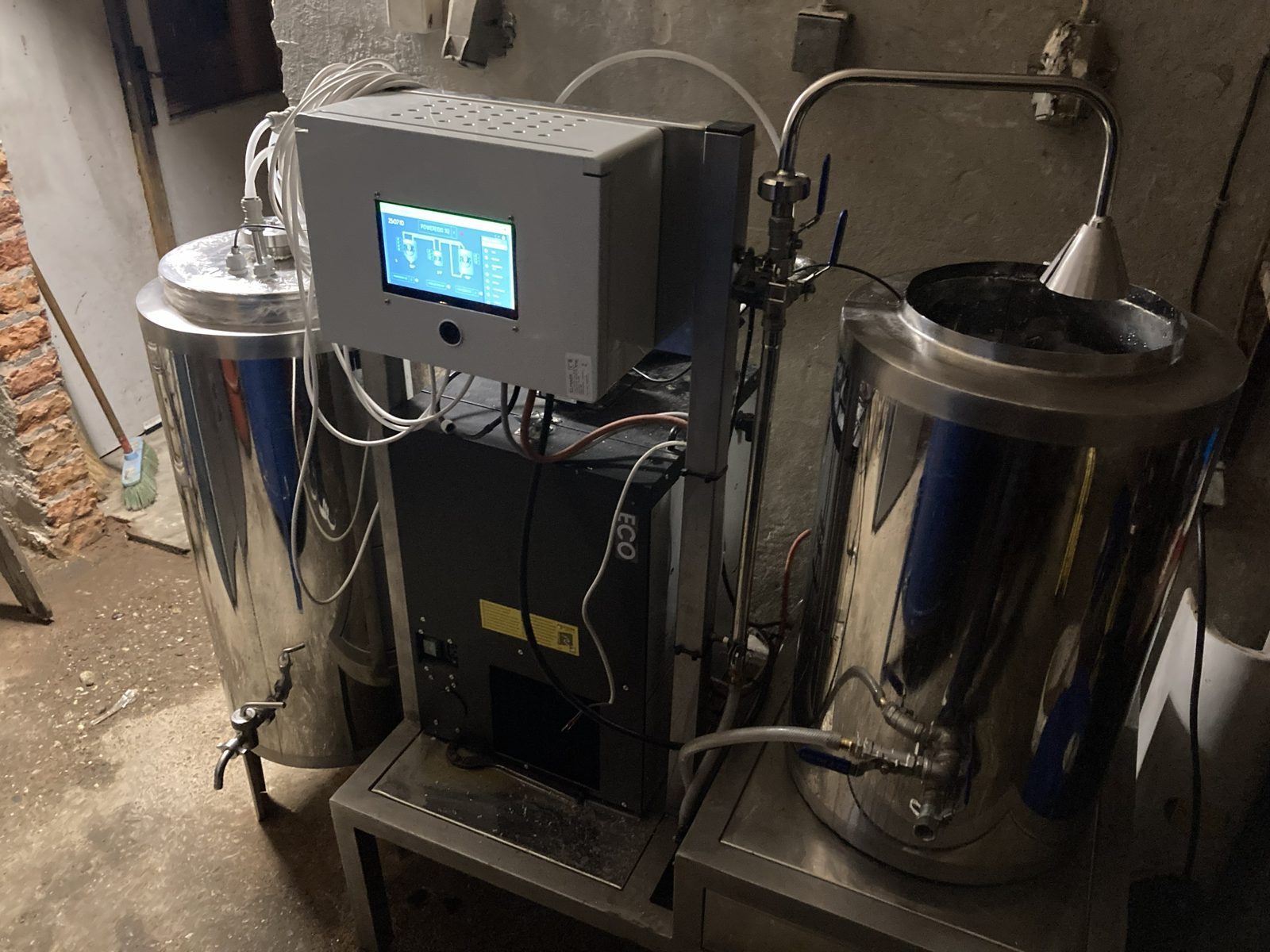
Like many good systems, this one began as a hand-built rig in a workshop: welded frame, kettles, manual valves — and a brewer standing next to it with a thermometer. The first batch was brewed on 28 November 2021. It worked, but every degree of temperature was somebody's job to watch.
Going digital
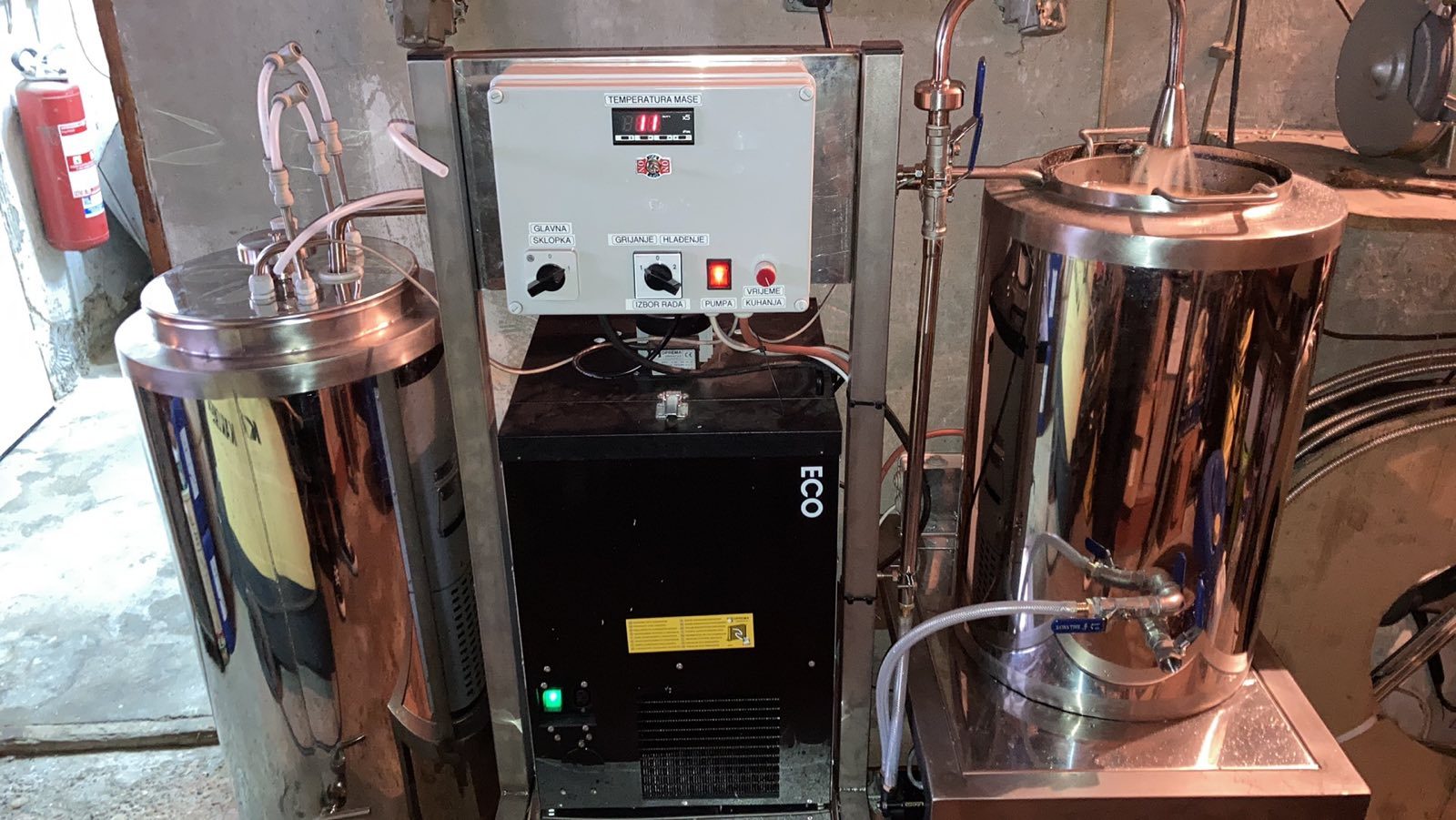
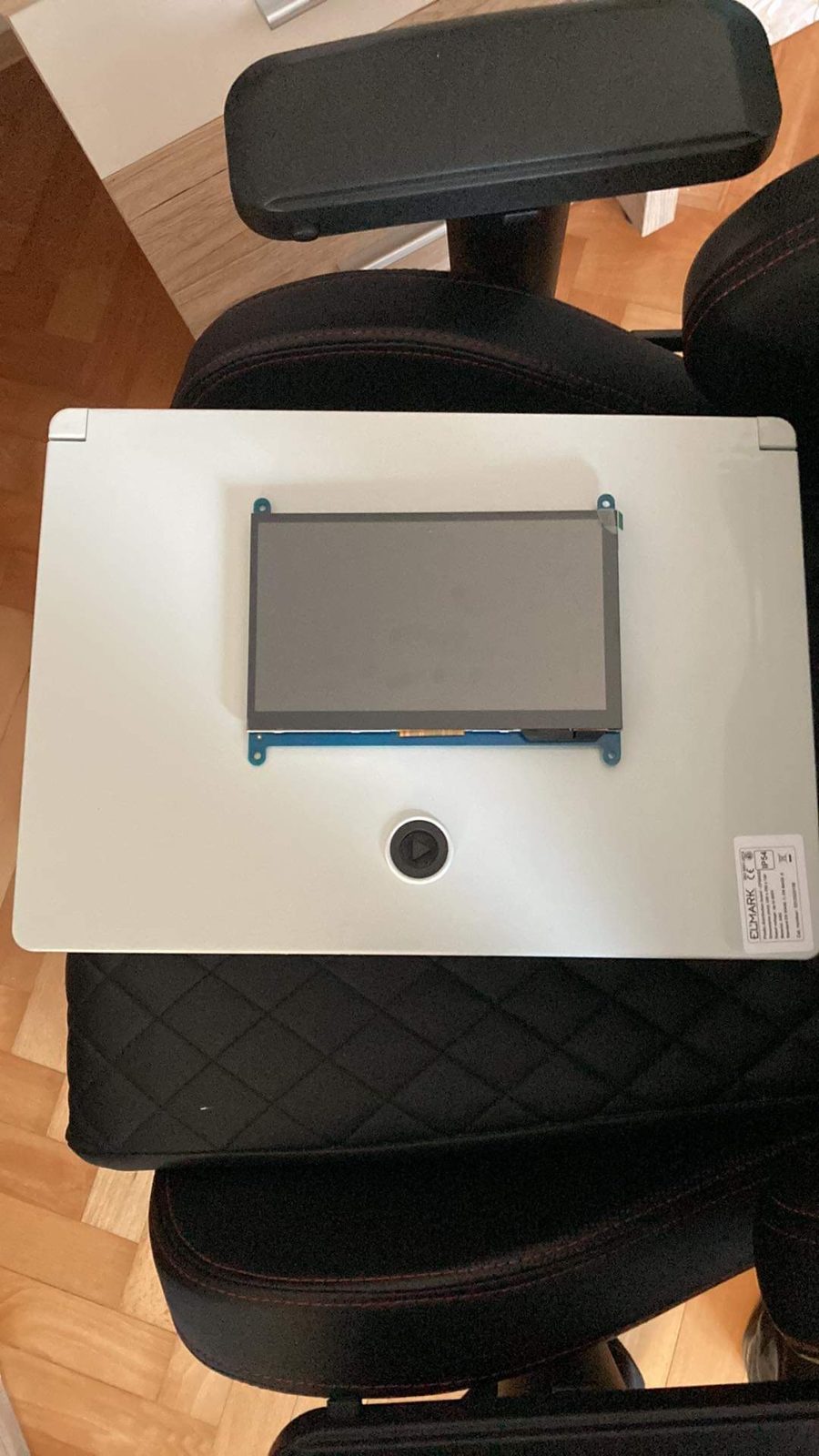
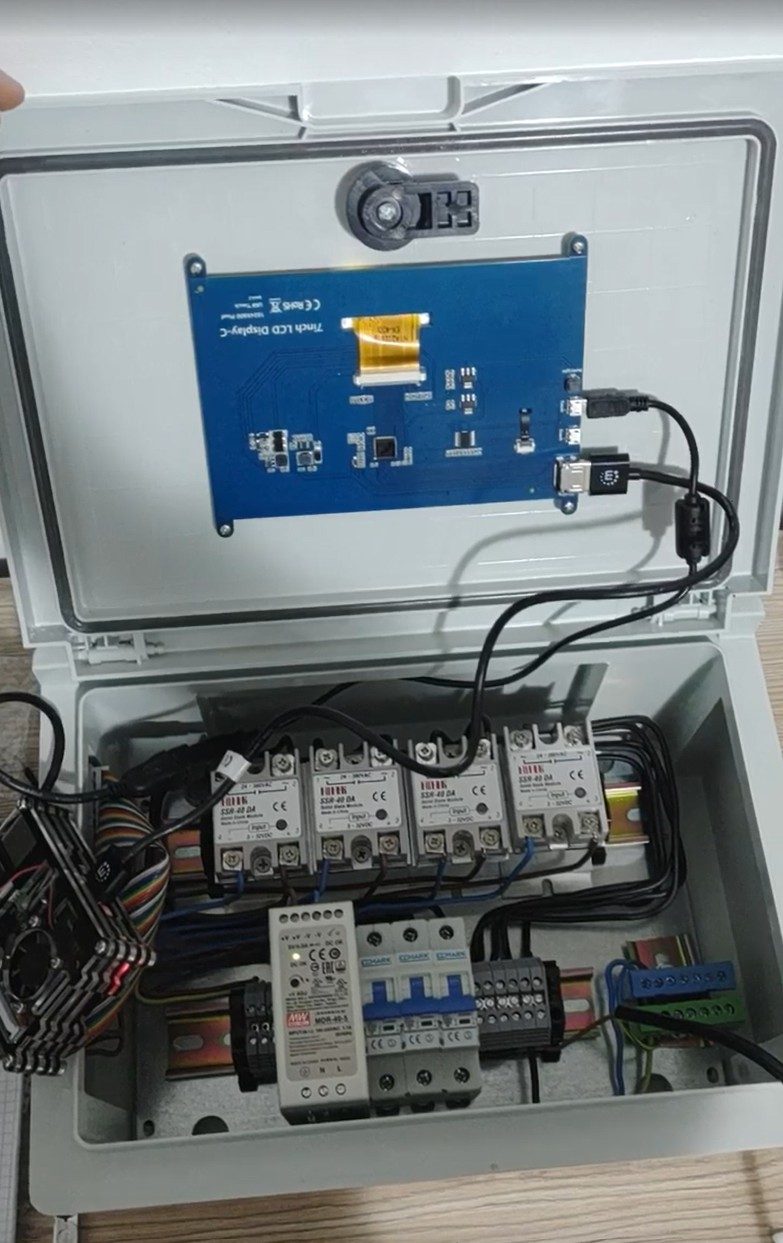
ARKBEL designed and built a control system around a Raspberry Pi: a DIN-rail cabinet with solid-state relays driving the pumps, heating and cooling, a 10-inch touchscreen on the rig, and custom software with a recipe engine — mash steps, temperatures and timings programmed per beer. A built-in web server and a mobile app with push notifications closed the loop. The first fully digital batch ran on 27 March 2022.
Two manual steps, the machine does the rest
On a brew day the system follows the recipe: it heats, holds mash temperature steps, runs both pumps and manages the boil. The brewer pours the grain in and takes it out after mashing — that's it. Once the wort cools to fermentation temperature, yeast is pitched by hand, and from there the system watches fermentation around the clock, pushing a notification to the phone if anything drifts or needs attention.
Scaling up
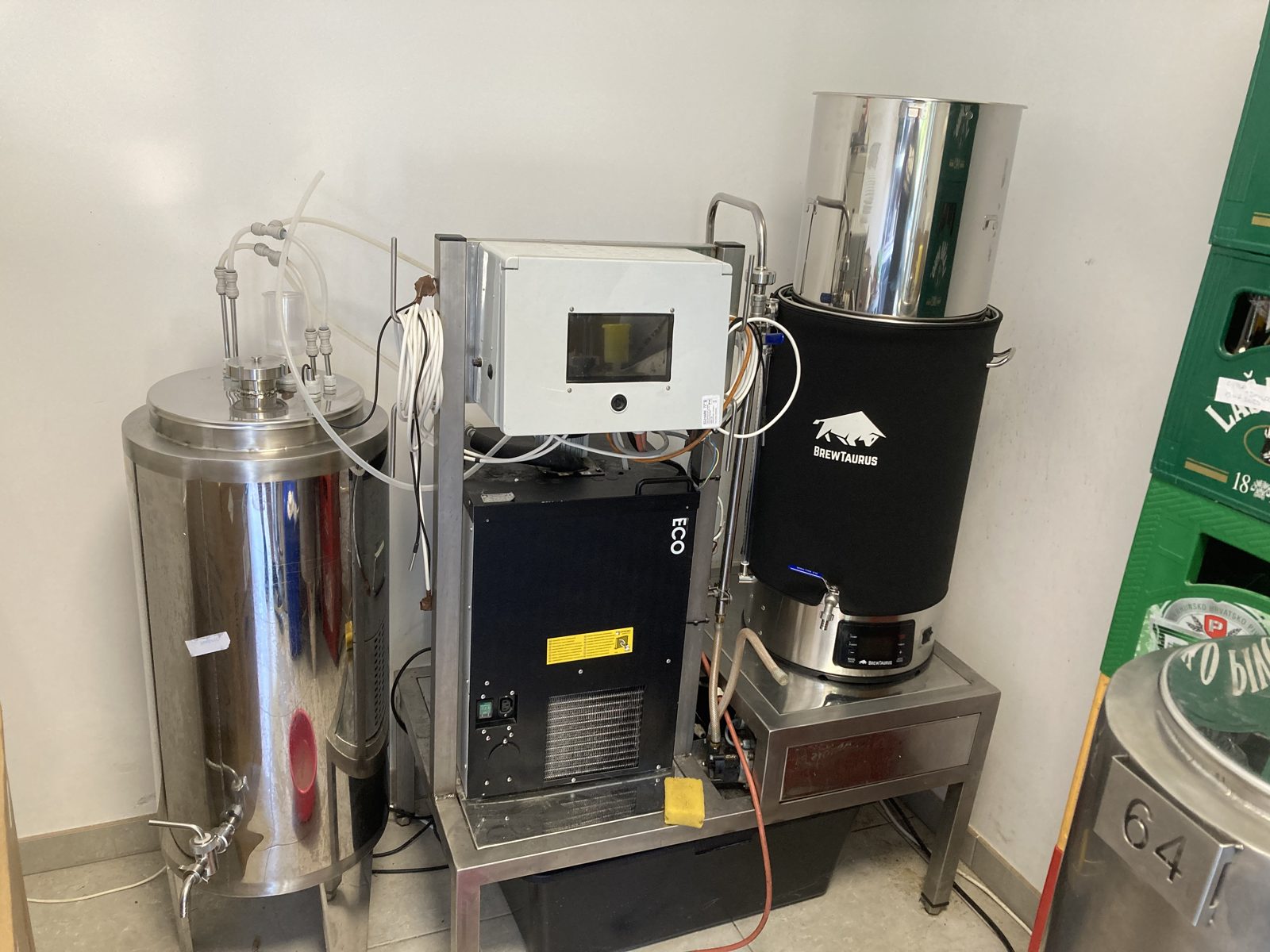
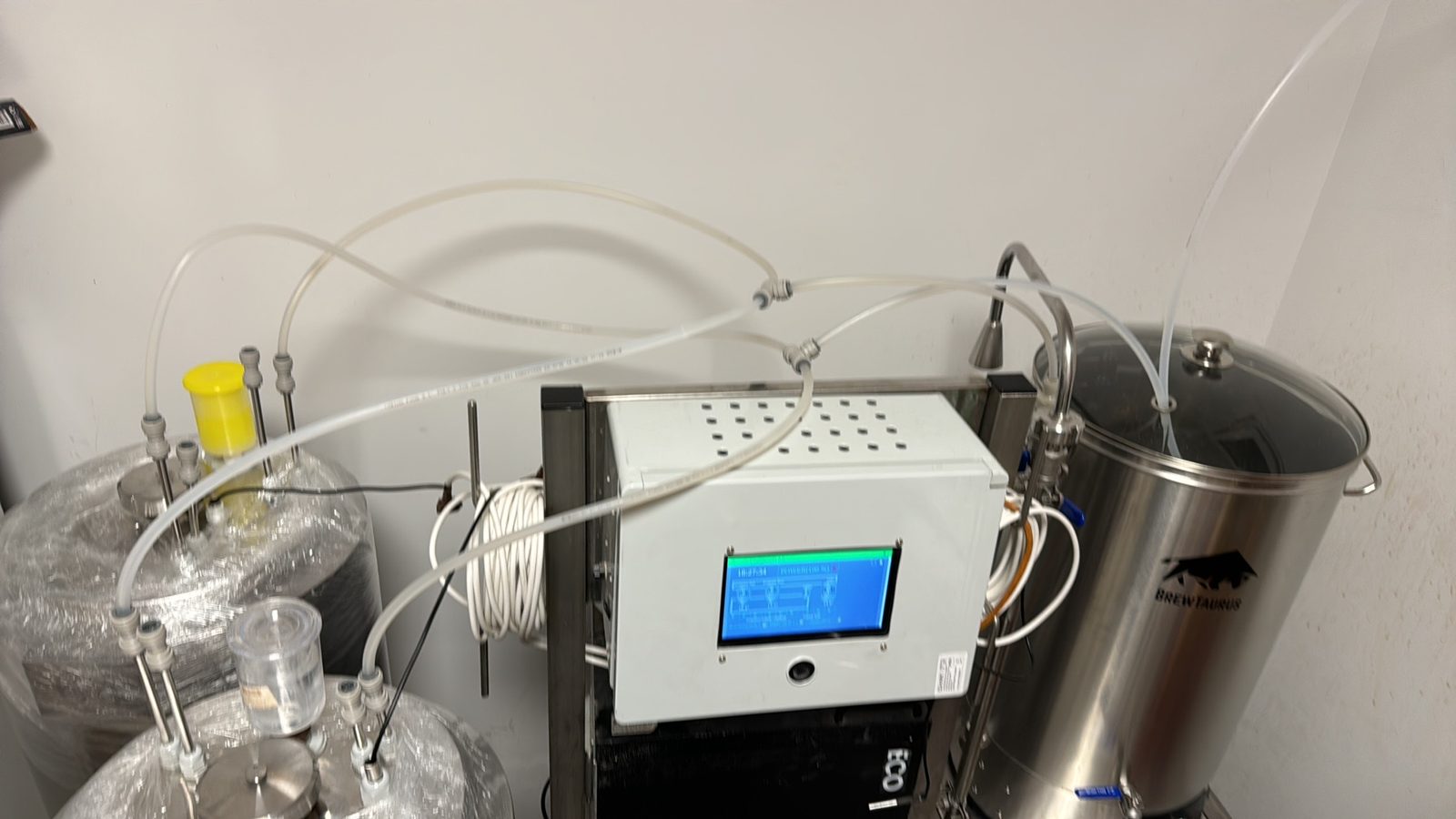
Success created its own problem: demand outgrew the kettle. In October 2023 the cooker was upgraded and a commercial tank joined the system; a month later a second fermentation tank followed. The same controller took the new hardware in stride — that's the point of building on software.
73 batches, monitored from anywhere
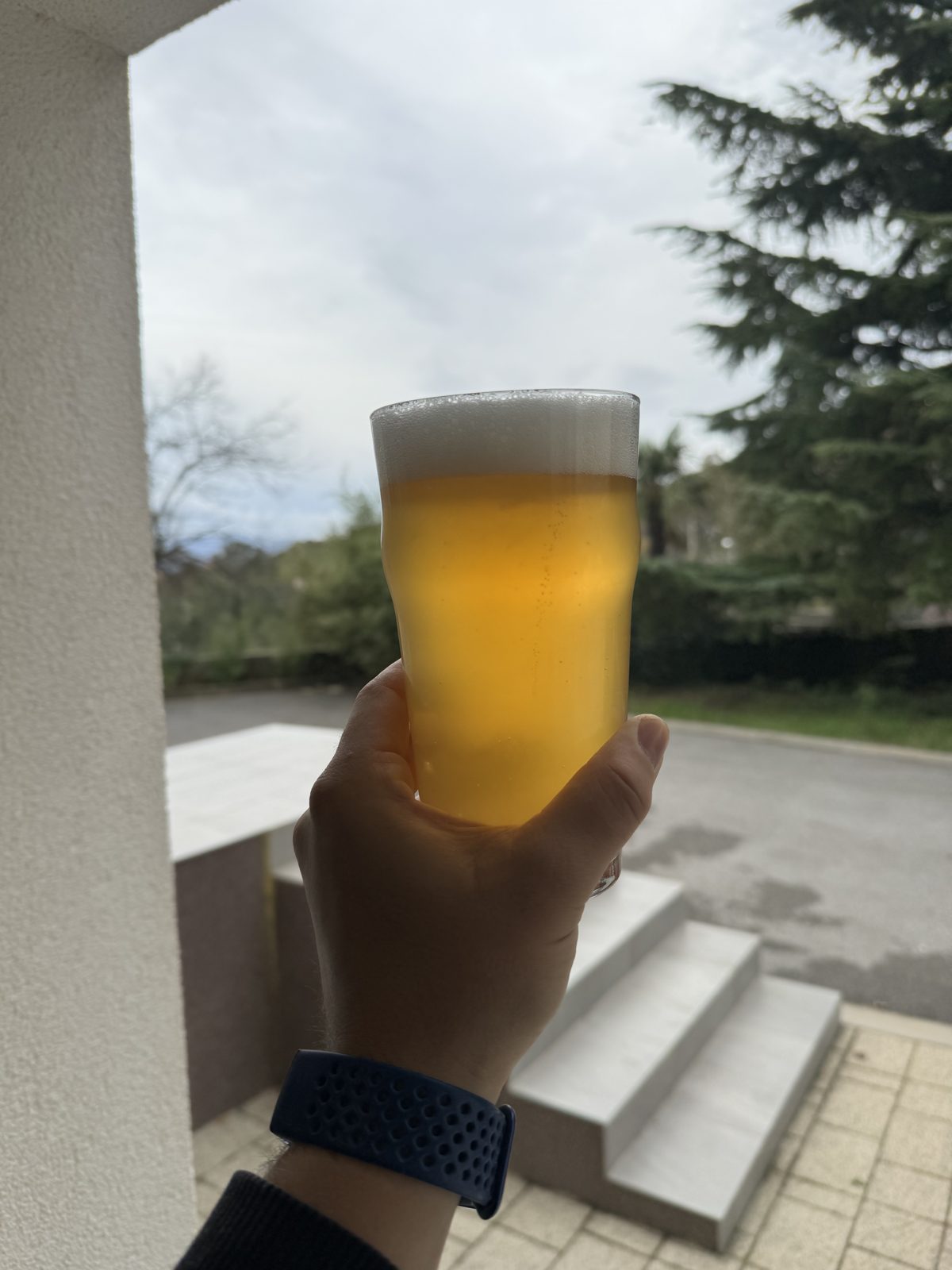
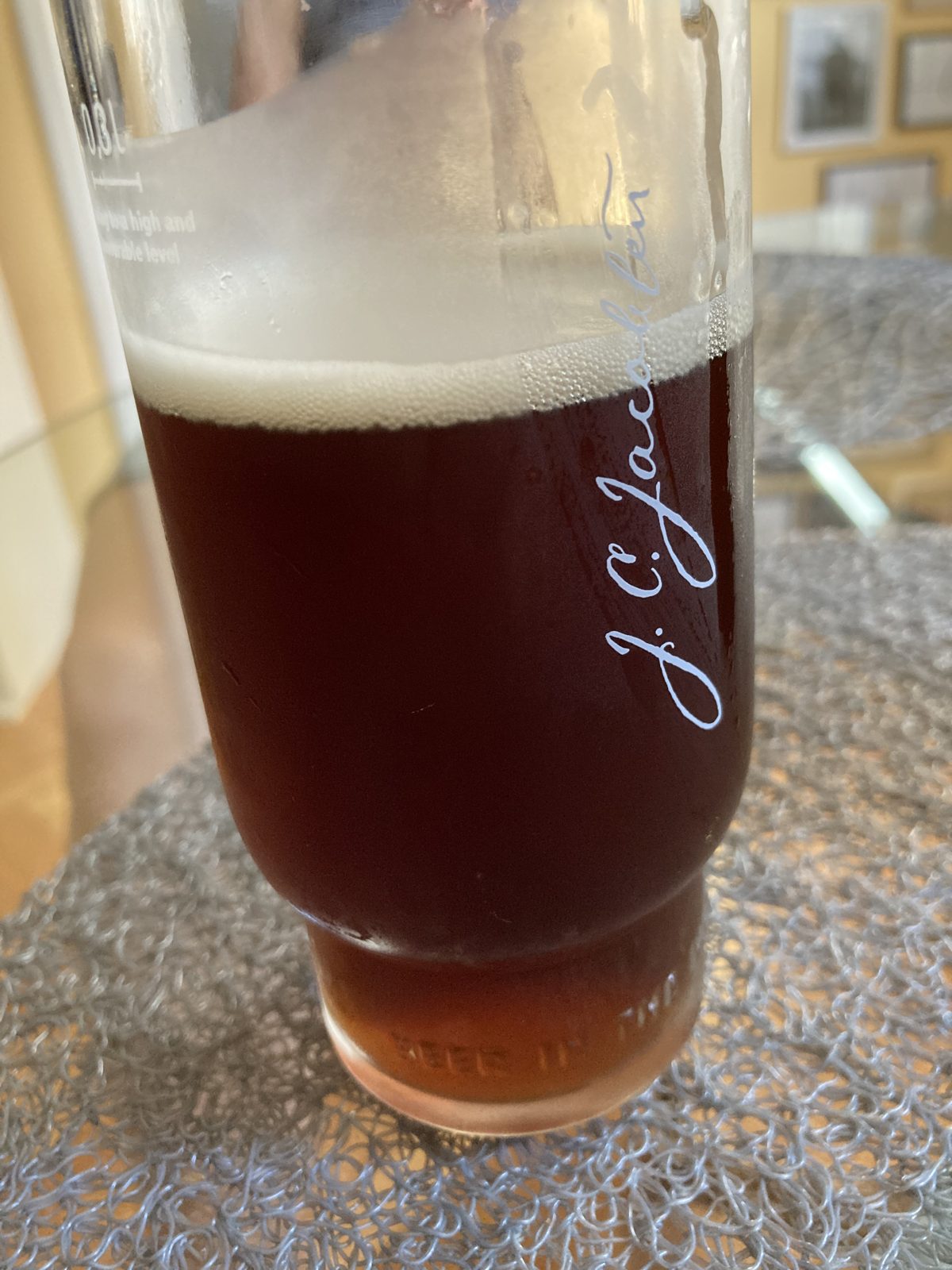
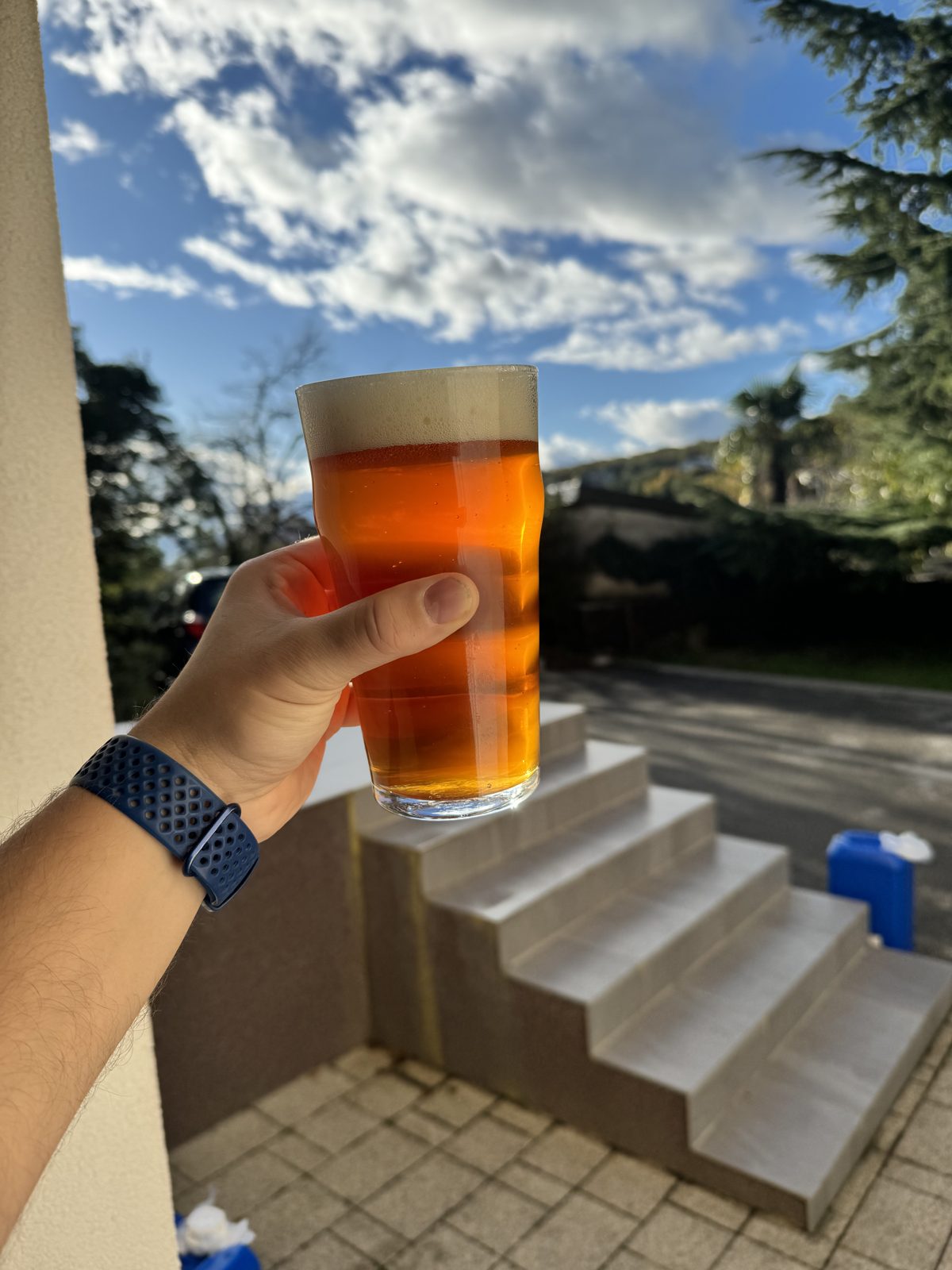
The brewery sits a 30-minute drive from the owner's home — which was the whole point. Every mash step, every fermentation degree, every alert arrives on his phone, wherever he is. Seventy-three batches have run through the system so far. The proof, as always, is in the glass.
What's inside the cabinet
- Raspberry Pi 3B running the custom control software
- 4× SSR-40 DA solid-state relays driving pumps, heating and cooling
- DS18B20 digital sensors for temperature measurement and control
- Mean Well MDR-40-5 DIN-rail power supply
- Elmark circuit breakers (16A / 20A / 25A)
- 10" touchscreen for on-rig control
- Custom software: recipe engine with mash steps, web server, mobile app with push notifications
Client details anonymized by agreement — happy to arrange a direct reference conversation. Curious how this scales? This project inspired our commercial-scale brewery monitoring demo →
Have a process worth automating?
Breweries, greenhouses, server rooms, wine cellars — if it has temperatures, pumps or schedules, it can probably run itself and report to your phone. Tell us about it and a senior engineer will give you an honest read.